

Teej is a celebration of tradition, togetherness, and dressing up for moments that matter. Whether you're exploring handloom sarees, browsing cotton sarees online, or choosing a handcrafted piece for the occasion, festive dressing doesn't have to end with the festival. The most meaningful pieces are often the ones that return to our wardrobes for family gatherings, festive lunches, cultural celebrations, and special evenings throughout the year.
For Rangsutra, this is an important part of keeping Indian craftsmanship relevant. Traditional techniques have a place in contemporary wardrobes when they are worn, enjoyed, and carried into different moments of life. Teej may give us a reason to dress up, but it doesn't have to be the reason a handcrafted piece is worn only once.
When Craft Becomes Part of Every Celebration
A festive wardrobe feels more personal when the pieces have a life beyond the occasion. A kurta worn for Teej can become part of another family celebration. A saree chosen for the festival can return for a wedding, cultural gathering, or festive evening. When handcrafted clothing is worn repeatedly, the craft behind it becomes part of our own stories too.
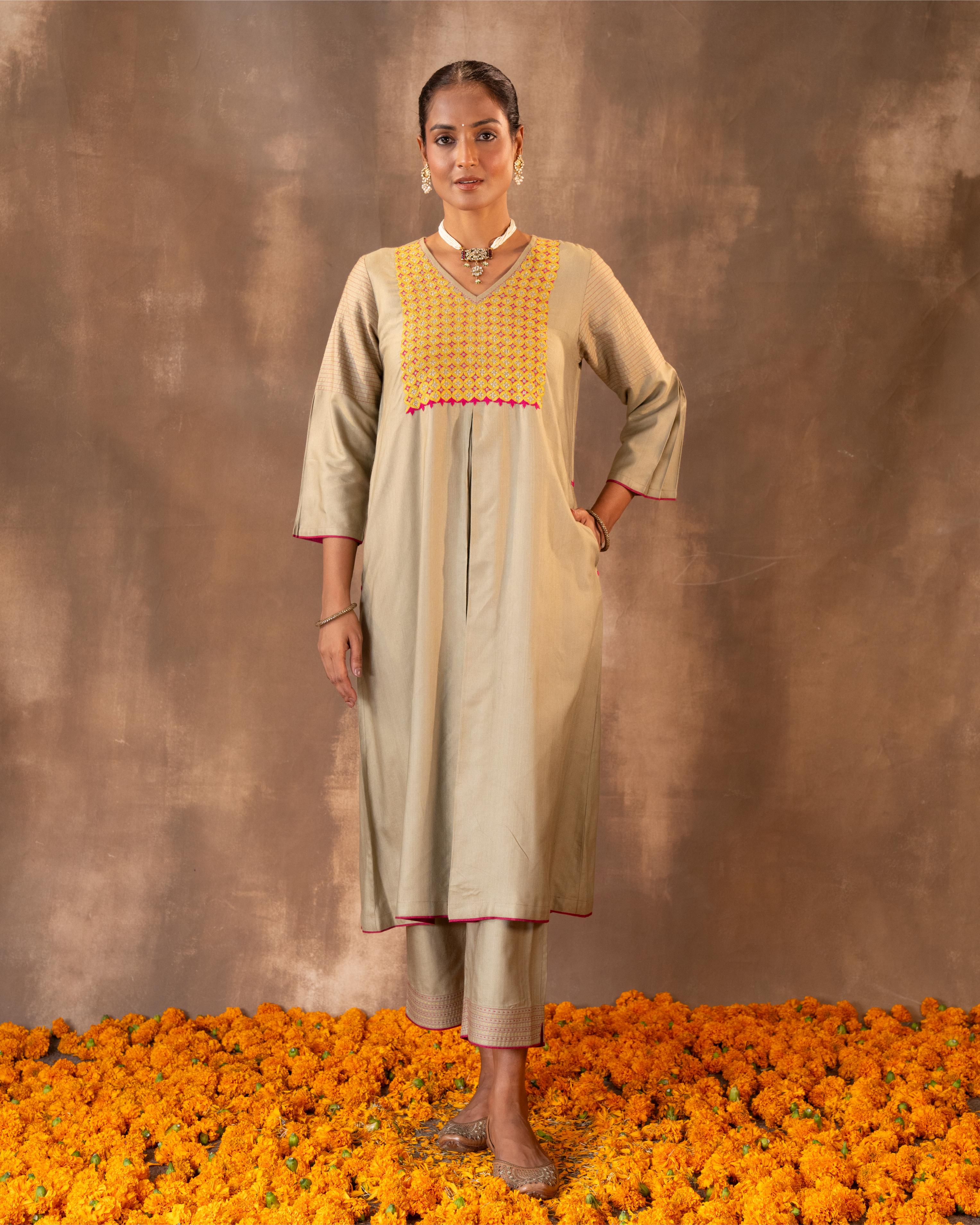
The Ruhani Olive Green A-Line Cotton Silk Kurta brings Pakka hand embroidery and mirror work around the neckline. Its A-line silhouette features a central box pleat, while quilting on the sleeves, a soft V-neckline, and contrast piping add structure to the design. The placement of the embroidery keeps the focus around the neckline, allowing the craft to become an important part of the overall look.
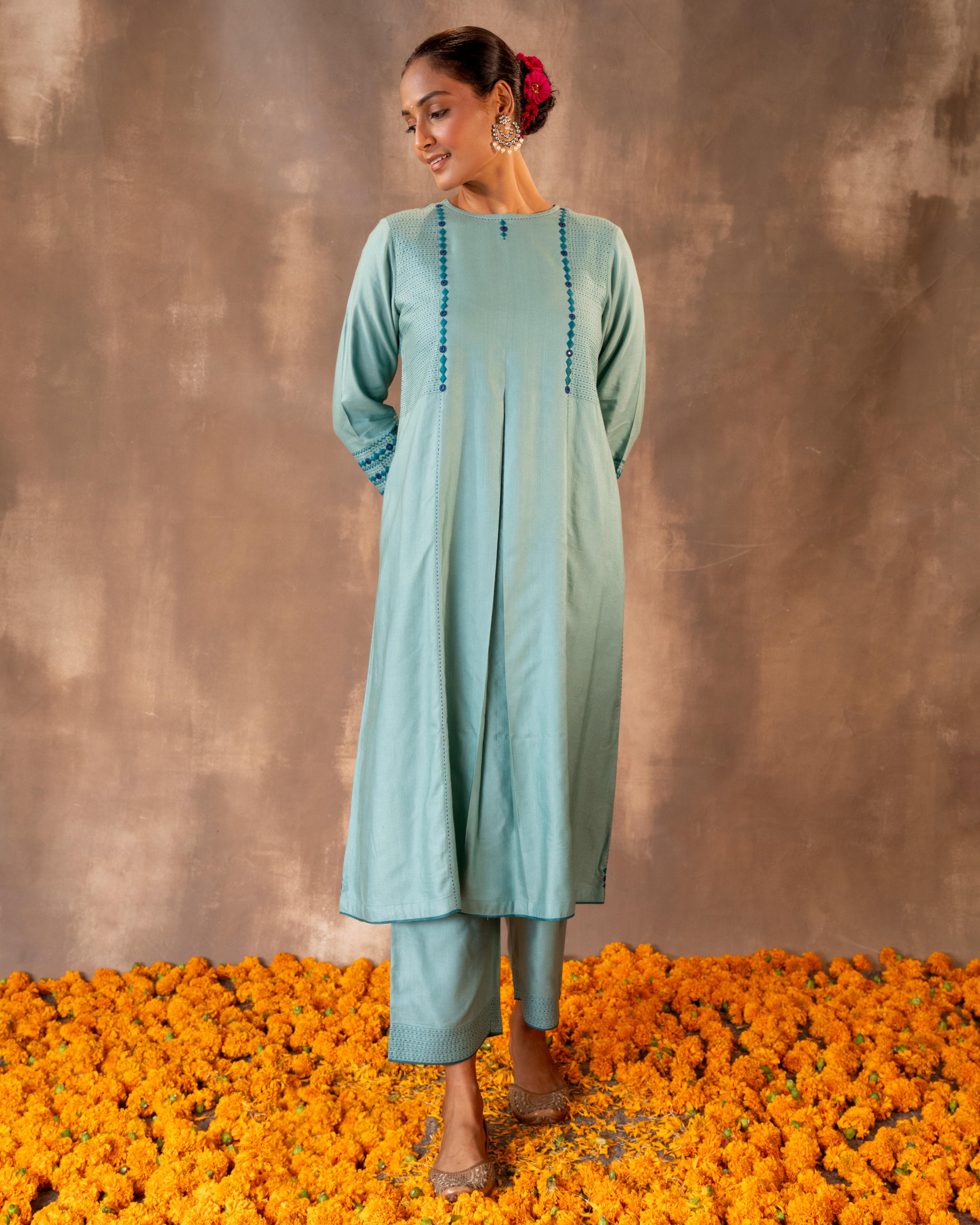
The Ruhani Teal A-Line Cotton Silk Kurta takes a different craft approach. Soof hand embroidery and mirror work are placed on the sleeves, complemented by quilted side panels, contrast piping, and a scooped neckline. The front box pleat adds ease and movement, making it a piece that can accompany you through a celebration.
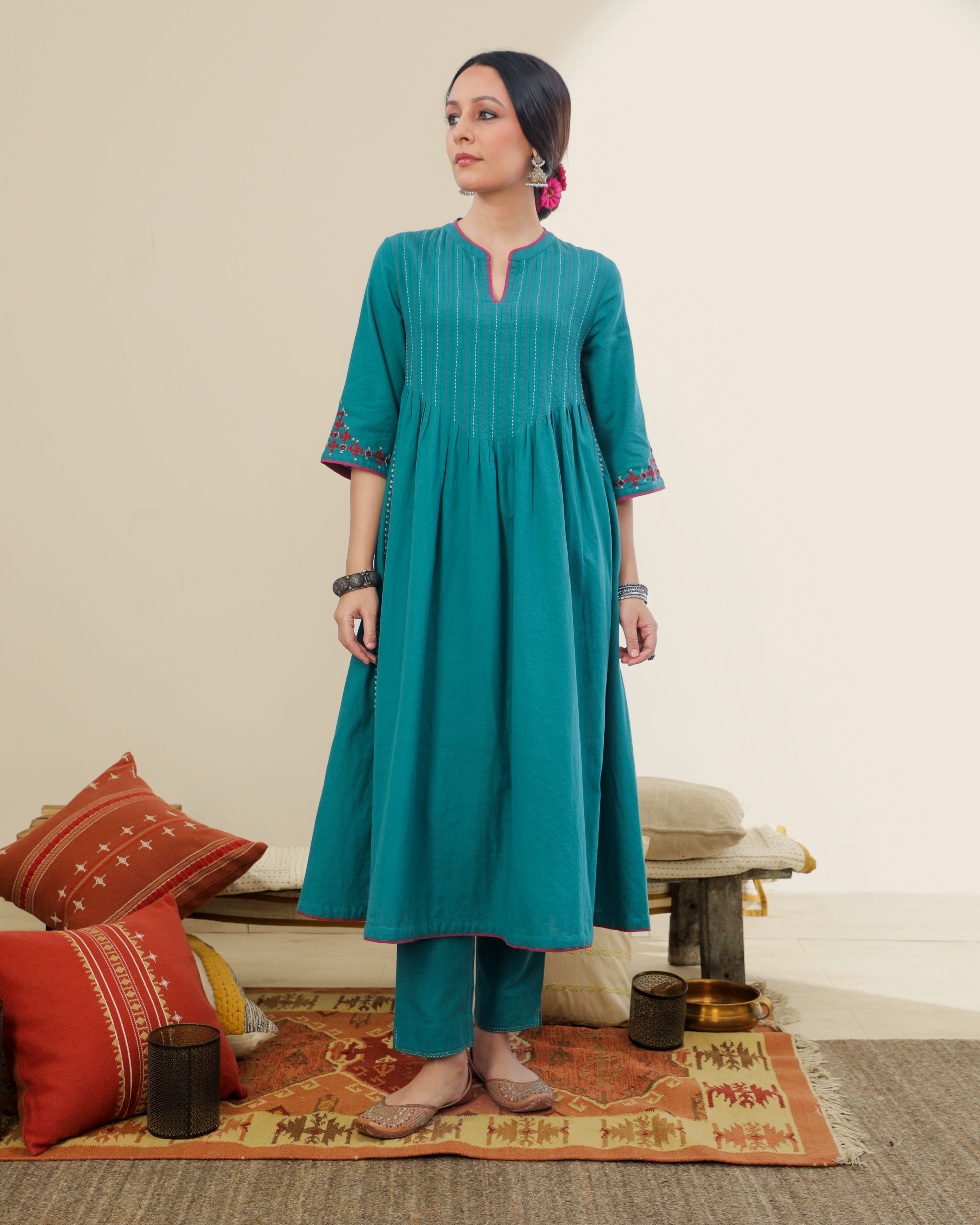
The Ruhani Teal Front-Yoke Cotton Kurta puts Sindhi hand embroidery and mirror work at the centre of the design. Pintucks and running stitches frame the embroidered yoke, while the flared sleeves feature engineered embroidery. A band collar, contrast piping, and side pockets bring together craft and functionality.
What connects these pieces is not that they look alike, but that each one gives a different regional craft technique a place in contemporary dressing. They show how festive clothing can carry the character of Indian craft without being limited to one particular celebration.
Sarees That Return Every Festive Season
A saree chosen for Teej can become much more than a festive outfit. It can become associated with a particular celebration, a family photograph, or an evening spent together—and then return for another occasion.
The Forest Muga Saree with Soof Hand Embroidery brings handwoven Eri silk together with engineered Soof embroidery. The fabric has a soft, dense texture, a natural matte finish, and a breathable feel. It also becomes softer with use and is not slippery, making it comfortable to drape and wear for longer periods. Its natural finish gives the saree a character that comes from the fabric itself.
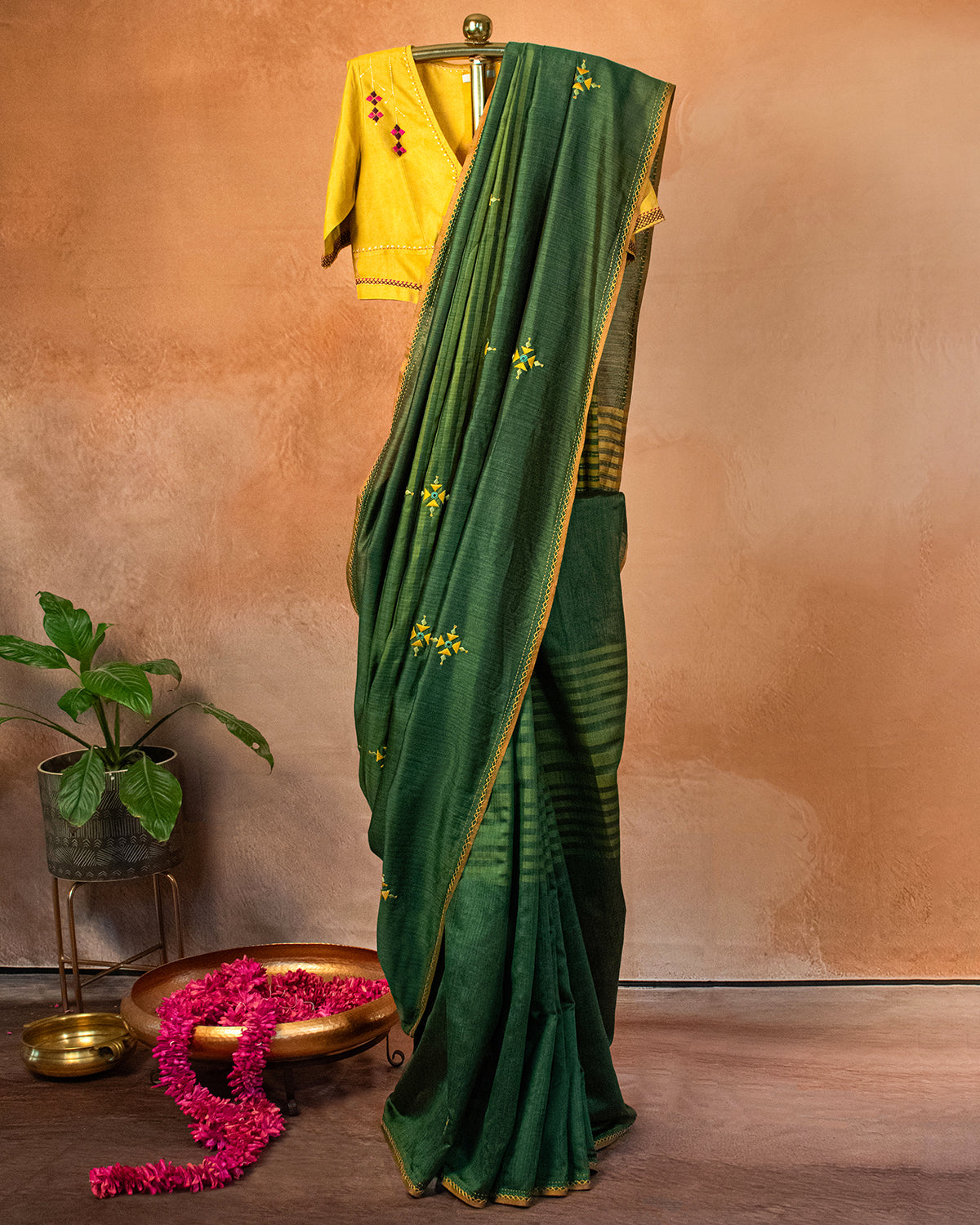
The Taruni Tussar Saree with Soof Hand Embroidery celebrates authentic Tussar silk and Soof embroidery. Its natural texture, visible slubs, and earthy lustre give the fabric a distinct character. The fabric feels light while still having substance, making the saree a piece where the material and embroidery work together.
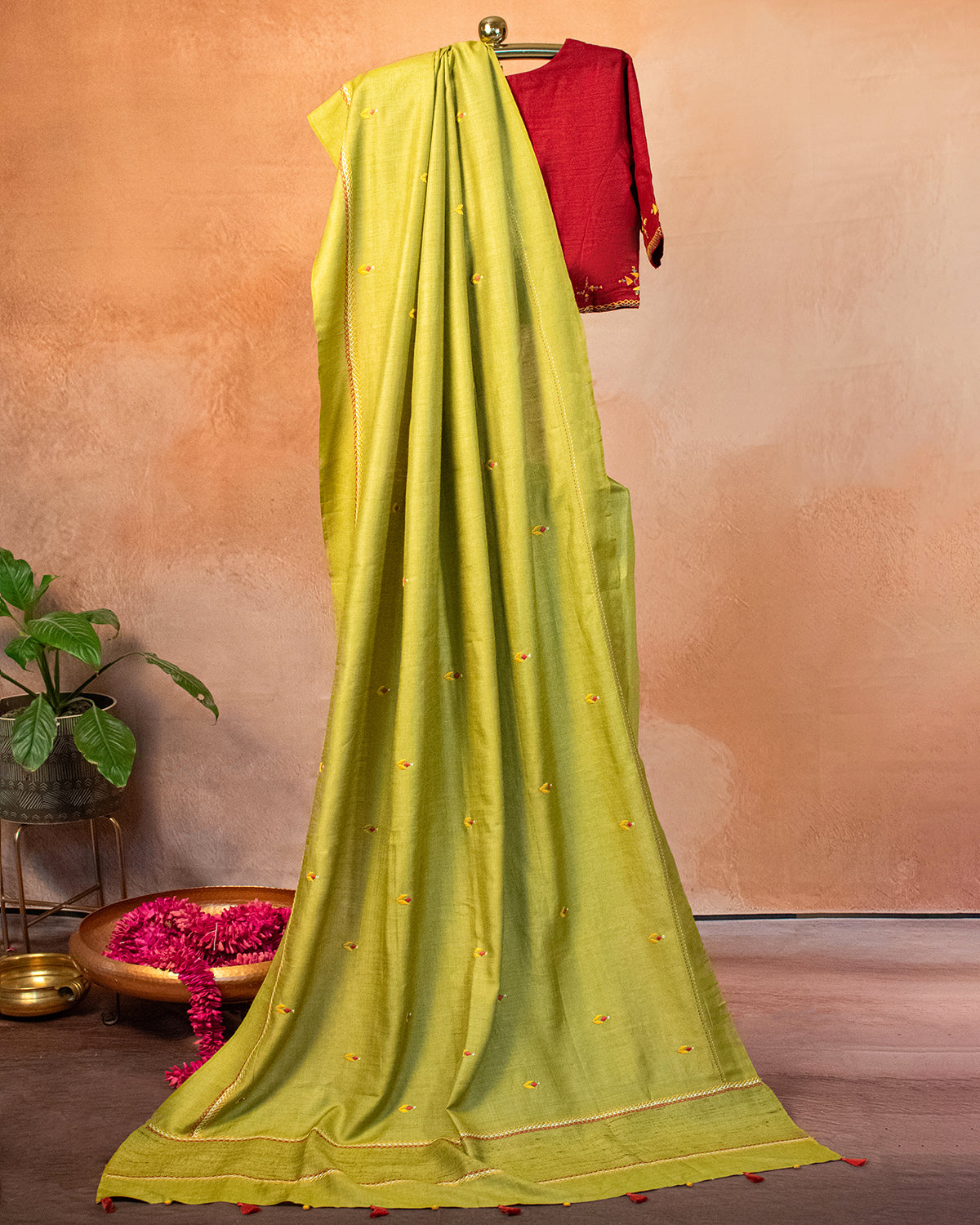
For anyone searching for a Tussar saree online, this is a reminder that the appeal of handwoven textiles lies not only in their appearance, but also in the texture and craftsmanship behind them.
For those exploring soof embroidered sarees, these pieces also show how embroidery can become part of the identity of a saree. Soof connects the garment with Rajasthan's desert embroidery heritage and the skill of the artisans who practise it.
And if you're browsing chanderi saree online, the same principle applies: the occasion may be the starting point, but the piece can have a life far beyond
Craft That Lives Beyond Trends
Festivals give traditional craftsmanship a visible place in our lives. But craft remains relevant when it continues to be worn, valued, and carried into new settings.
The Baori Green Hand Embroidered Sleeveless Kurta Cum Dress brings Kharak embroidery and mirror work together with striped cotton trims and tasselled ties. The silhouette also features godets for extra flare. The embroidery across the front gives the piece its handcrafted character, while the silhouette allows it to move beyond a single festive occasion and become part of other moments as well.
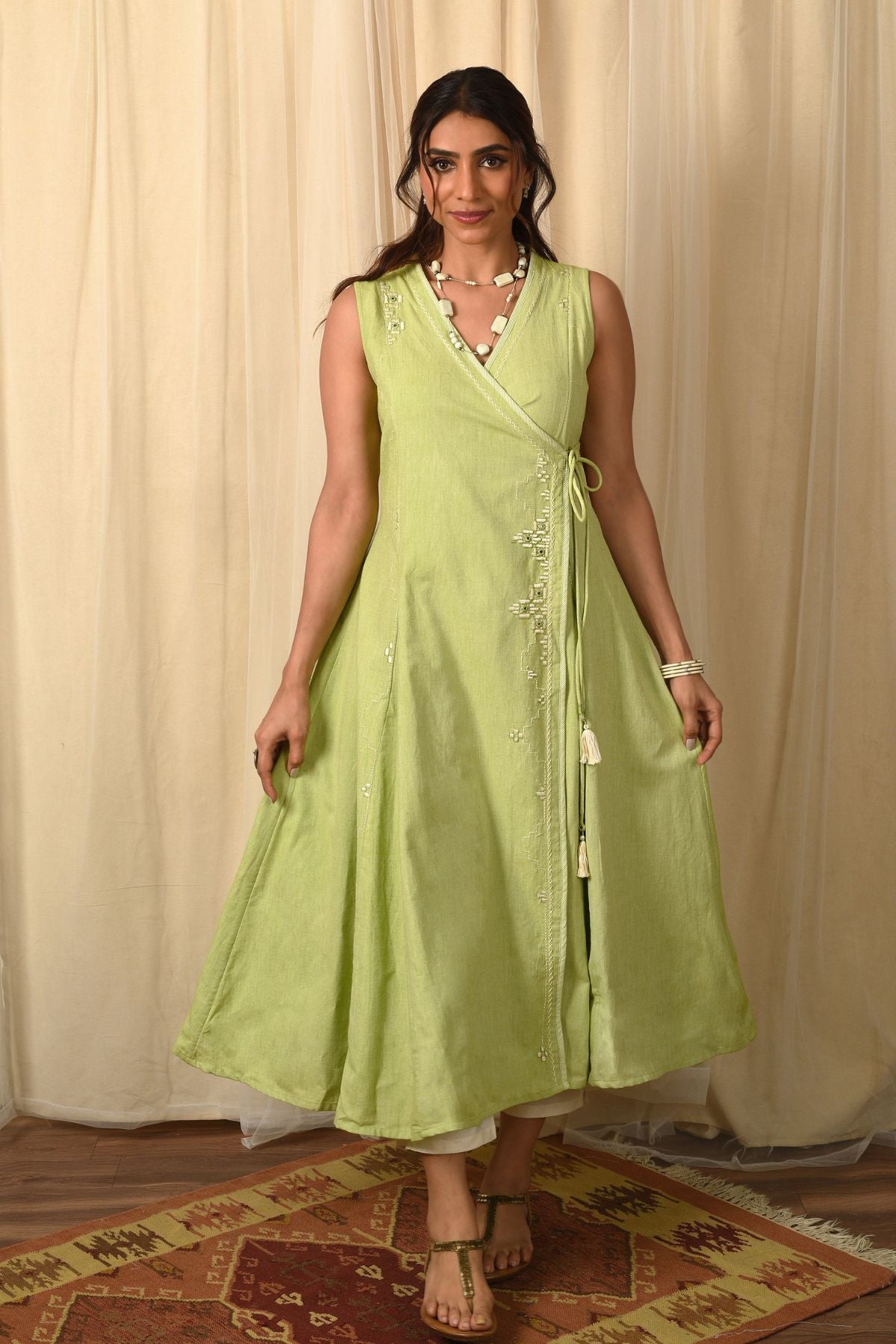
That is what makes festive dressing meaningful beyond the festival itself. The clothing becomes a way of keeping Indian craftsmanship visible in modern wardrobes while giving traditional skills a continued place in contemporary life.
Celebrating Teej Through Craft
Teej gives us an opportunity to celebrate Indian craftsmanship through what we wear. But the celebration doesn't have to end when the festival does.
Whether it is a handcrafted kurta or one of the handloom sarees in your wardrobe, let the piece become part of more than one memory. Wear it to the family gathering, bring it back for another festive evening, or make it part of a celebration that has nothing to do with Teej.
Frequently Asked Questions
1. What makes handcrafted clothing a good choice for Teej?
Handcrafted clothing brings rich Indian craft traditions into festive dressing through techniques such as Pakka, Soof, Sindhi, and Kahark embroidery. These pieces, though rich in technique, texture and colour, are elegant enough and can also continue to be worn beyond Teej.
2. How can I choose pieces that work beyond one celebration?
Look for pieces that combine traditional craftsmanship with designs you can wear across different occasions. A festive piece becomes more valuable when it can return for family gatherings, cultural celebrations, and other special moments.
3. Why are handloom sarees suitable for festive dressing?
Handloom sarees bring together the character of the textile and the skill involved in creating it. They allow regional weaving and embroidery traditions to remain part of contemporary festive wardrobes.
4. What should I consider when looking for a Tussar saree online or chanderi saree online?
Choose Tussar if you prefer a naturally textured, slightly coarse fabric with visible slubs, earthy lustre, and a structured drape that holds its pleats beautifully. Choose Chanderi if you prefer a lighter, airier fabric with a delicate sheen and softer drape.
In short, Tussar offers texture and structure, while Chanderi offers lightness and subtle sheen.
5. What makes soof embroidered sarees special?
Soof embroidered sarees connect hand embroidery with textile craftsmanship, bringing Rajasthan's regional craft traditions into contemporary festive dressing.


