

For generations, sarees have marked the moments that matter. A wedding. A first day. A farewell. A homecoming. The saree worn to these occasions is rarely forgotten — not because of what it cost, but because of what it carried.
Today, something is shifting. The saree is no longer only a garment for milestones. It is becoming something more personal — a reflection of who a woman is, not just the occasion she is dressing for. Women are choosing sarees that feel like them. That carry craft they believe in. That tell a story they want to be part of.
At Rangsutra, women artisans are shareholders and co-owners of the company — not just makers. Every saree in this collection is produced in centre-based, professionally managed craft centres with fair wages, statutory benefits including PF and ESI, safe working conditions, and a strict no child labour policy. Each piece is rooted in regional craft traditions and designed for today's woman — someone who wants a saree that is hers, not just beautiful.
Heritage, Reimagined for the Present
The modern woman is not choosing a handcrafted saree simply because it is beautiful. She is choosing it because it feels like hers. Because no two handwoven Tussar sarees drape in the same way. Because the Soof embroidery on one piece is never identical to the next — the spacing of the geometric motifs, the tension of the thread, the placement of a border — all of it is decided by the hand of the artisan in the moment of making. This is what gives a handcrafted saree its individuality. It cannot be replicated, only continued. She values garments that are thoughtfully made, designed to last, and rooted in traditions that deserve preservation.
That is where Rangsutra's new collection finds its purpose—bringing regional craftsmanship into contemporary wardrobes without compromising its authenticity.
The Beauty of Tussar, The Soul of Soof
The Baigni Tussar Saree with Soof Hand Embroidery beautifully showcases this philosophy. Tussar has a natural slub — irregular threads that create variation in the weave and give the fabric its characteristic texture and warmth. The Soof embroidery does not try to smooth this over. Instead, the geometric motifs sit within the fabric's natural texture, the counted thread work following the grain of the weave. The result is embroidery that feels grown from the fabric rather than applied to it — which is what makes this saree feel personal rather than produced.
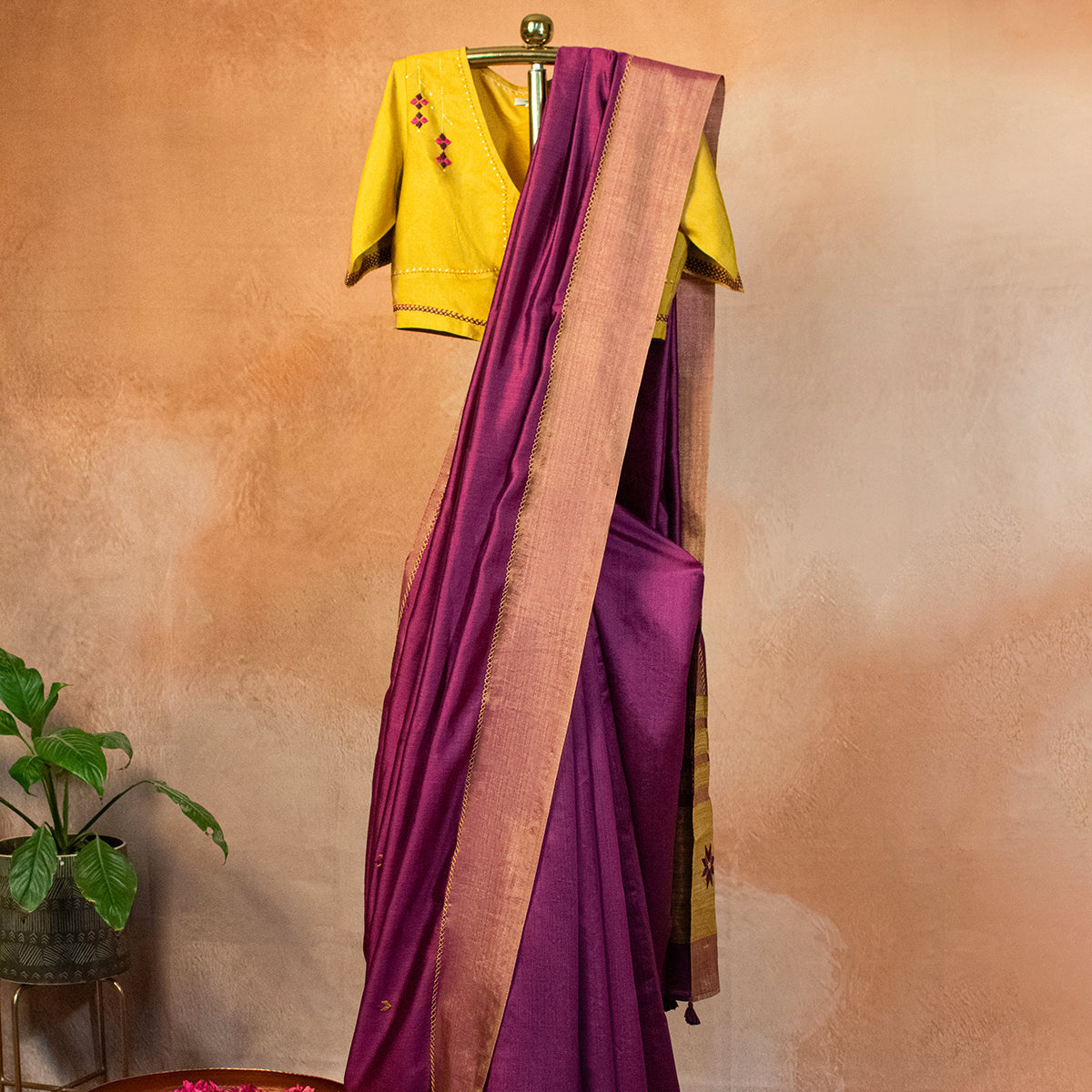
Its elegant drape makes it equally suitable for festive gatherings, cultural celebrations, or meaningful occasions where timeless style feels more relevant than trends. It is a saree that quietly celebrates skilled craftsmanship while allowing the wearer to create her own story.
Where Tradition Meets Contemporary Grace
The Chitrani Tussar Saree with Soof Hand Embroidery continues this journey through thoughtful craftsmanship and elegance.
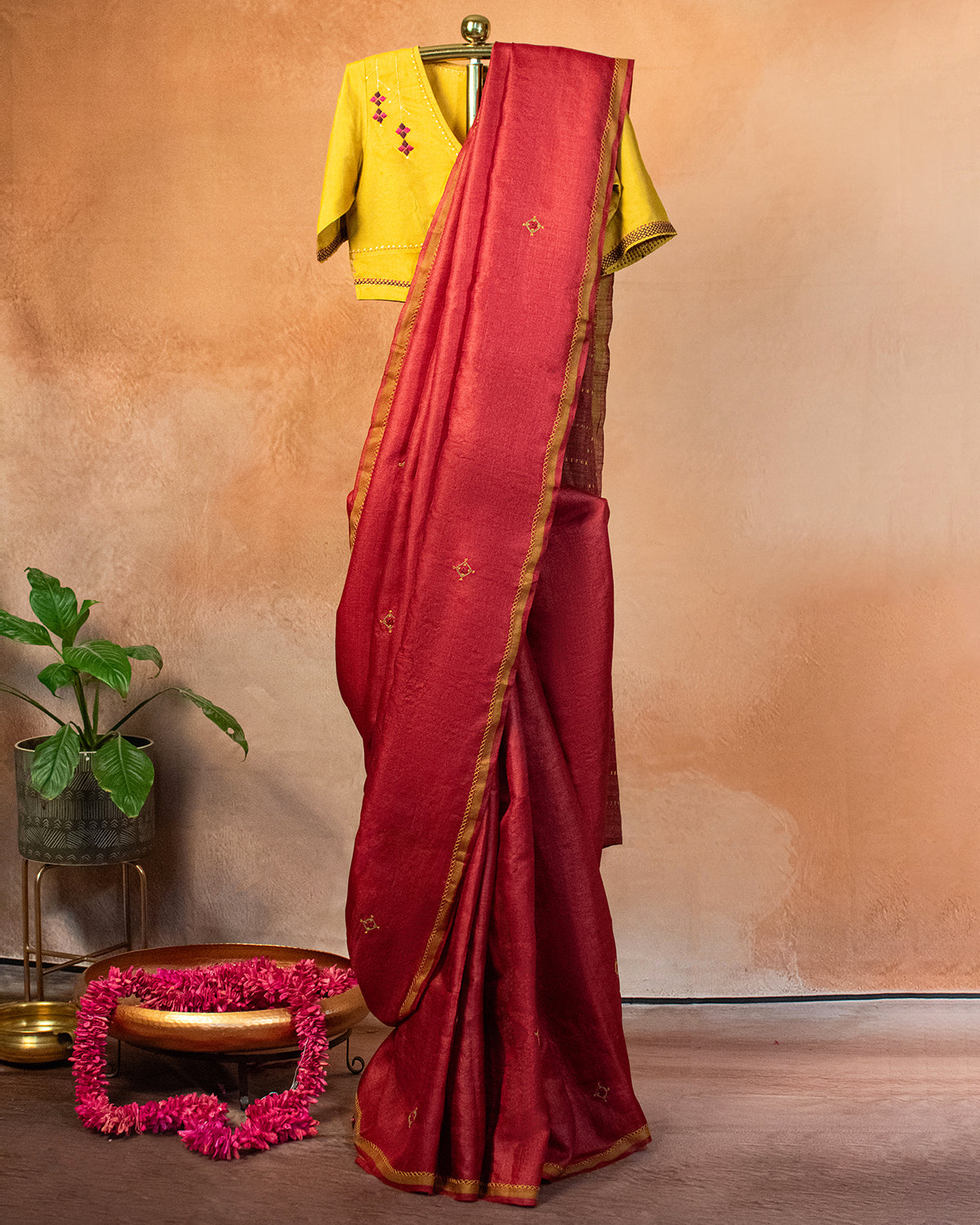
Every Chitrani saree is slightly different from the last. The Soof embroidery — worked in counted thread directly onto the handwoven Tussar — means that the placement, rhythm, and density of the motifs shift subtly from piece to piece. What you receive is not a style. It is a specific saree, made at a specific moment, by a specific pair of hands. That is the individuality that milestones deserve — and that everyday occasions are beginning to demand too. It is designed for women who appreciate garments that move easily between celebrations, professional events, and intimate family occasions.
This is the essence of slow fashion—creating pieces that remain relevant year after year because they are designed with care rather than seasonal trends in mind.
Crafted to Be Worn, Not Stored
One of the greatest strengths of handcrafted sarees is their versatility.
Chanderi is translucent and light — it moves differently from Tussar, catching light rather than absorbing it. The Tamra Chanderi Saree with Soof Hand Embroidery works with this quality rather than against it. The geometric motifs are precise but not heavy, sitting on the fabric without weighing it down. Where Tussar gives embroidery a warm, grounded quality, Chanderi gives it delicacy. The same craft tradition, a completely different character — which is what makes each fabric choice in this collection a considered one.
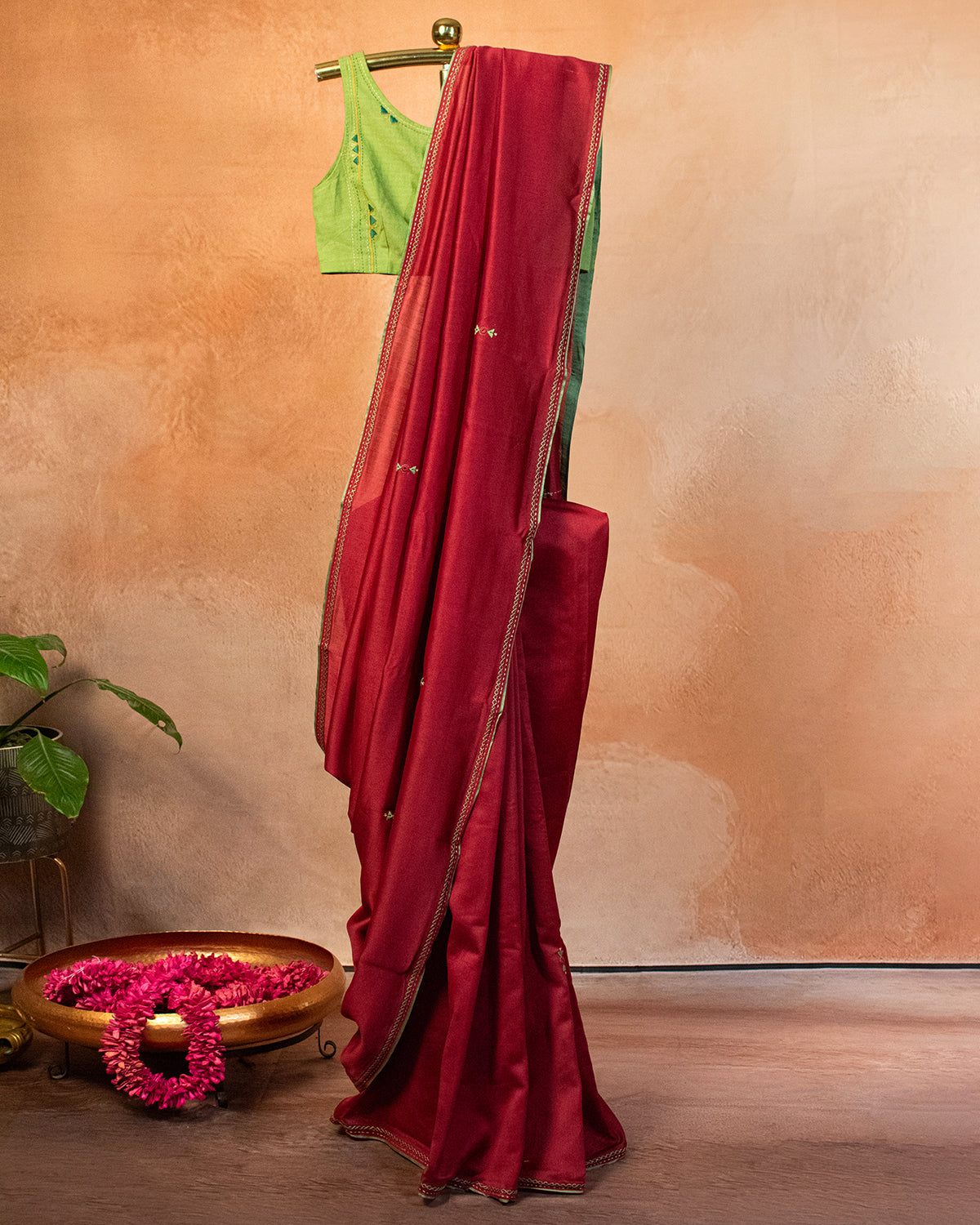
Today's handcrafted sarees are no longer reserved for weddings alone. They are becoming part of everyday ethnic wardrobes, proving that heritage and practicality can beautifully coexist.
A Saree That Carries Forward a Legacy
The Asmi Tussar Saree with Soof Hand Embroidery reflects the enduring beauty of artisan craftsmanship. Every embroidered motif is carefully created by skilled women artisans, preserving a craft tradition that has been nurtured over generations.
At Rangsutra, women artisans are shareholders and co-owners of the business with governance rights and a stake in its growth. Every saree is produced in professionally managed, centre-based craft centres with fair wages, statutory benefits including PF and ESI, safe working conditions, and a strict no-child-labour policy. This is not simply ethical production — it is an ownership model built on the belief that the people who create value should benefit from it.
And because every saree is made by hand, each one is unrepeatable. The Asmi you receive is not the same as the one someone else receives. The embroidery is the same tradition, the same craft, the same community — but the specific piece is yours. That is the nature of handmade. And that is what turns a saree from a garment into something personal.
More Than a Saree
A handcrafted saree becomes part of your story.
It accompanies milestones, celebrations, achievements, and quiet everyday moments. Over time, it gathers memories that cannot be replicated by mass-produced fashion.
That is the beauty of conscious clothing. It reminds us that what we wear has the power to connect us—not only to our culture but also to the people whose craftsmanship keeps these traditions alive.
Our new saree collection is an invitation to celebrate that connection.
To wear heritage with pride.
To choose craftsmanship over convenience.
And to discover that the most meaningful fashion is never just about looking beautiful—it is about honouring the stories woven into every thread.
Frequently Asked Questions
Q. What makes handcrafted sarees different from machine-made sarees?
Handcrafted sarees are created by skilled artisans using traditional techniques, giving every piece unique detailing, character, and craftsmanship that cannot be replicated through mass production.
Q. What is Soof hand embroidery?
Soof is a traditional embroidery technique rooted in the craft communities of Rajasthan. It is worked in counted thread directly onto the fabric, creating precise geometric motifs that sit within the weave rather than on top of it. Created entirely by hand, no two pieces of Soof embroidery are identical — which is part of what makes it so well suited to handwoven fabrics that already carry their own natural variation.
Q. Can handcrafted sarees be part of everyday wardrobes?
Absolutely. Contemporary handcrafted sarees are designed to suit festive occasions, professional settings, cultural events, and elegant everyday dressing, making them versatile additions to modern wardrobes.
Q. How does Rangsutra preserve India's heritage craft?
Rangsutra is an artisan-owned company where women artisans are shareholders with a real voice in governance. All production is centre-based — not home-based — in professionally managed craft centres with fair wages, statutory benefits including PF and ESI, safe working conditions, and a strict no child labour policy. Regional craft traditions like Soof embroidery are not just referenced — they are the foundation of what the brand makes, worked onto handwoven fabrics in contemporary silhouettes designed for modern wardrobes.