

Some festive days begin with anticipation, some come alive in a burst of light, and some are remembered most for the people we share them with. From Choti Diwali to Diwali and finally Bhai Dooj, the festive season moves through different moods, each carrying its own traditions and memories.
At Rangsutra, this idea of carrying traditions forward extends to craft too. The skills and techniques passed from one generation to another find a place in the present through clothing, while the artisans practising them build livelihoods around their craft.
Choti Diwali: When the Celebration Begins
Known as Naraka Chaturdashi, Choti Diwali marks the triumph of good over evil and light over darkness. It is also a day of preparation, creating a sense of renewal before the main Diwali celebration.
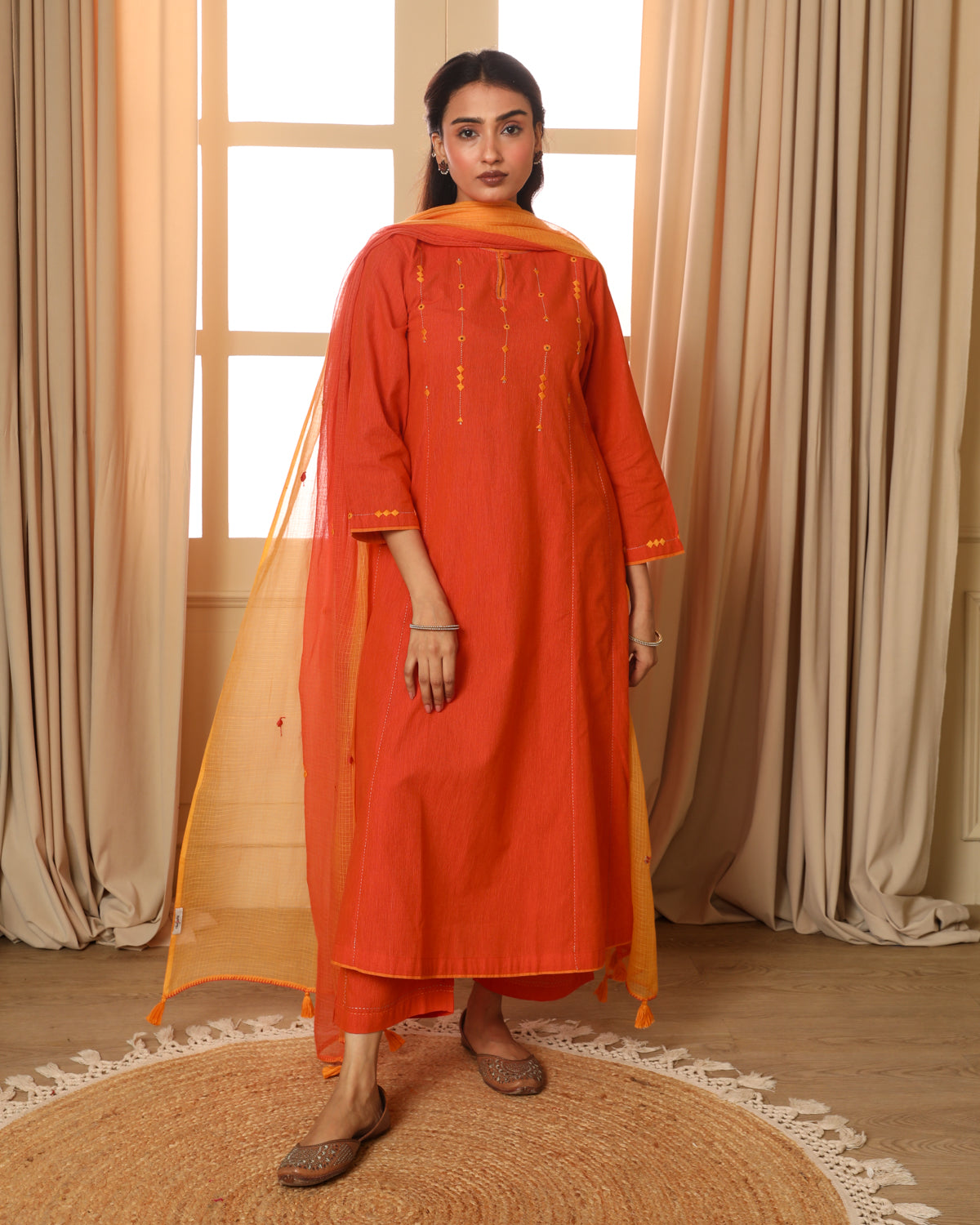
That feeling of warmth and anticipation finds an easy expression in the Aashvi Orange Flared Mangalgiri Cotton Kurta With Soof Hand Embroidery. Its warm orange brings colour to the beginning of the festivities, while breathable Mangalgiri cotton keeps the look comfortable as preparations turn into gatherings. Soof embroidery from Rajasthan adds a layer of heritage craft, bringing the skill of artisans into a garment that feels festive without being overly elaborate.
The beauty of such craft lies not only in how it looks, but in what keeps it going. When an artisan's skill becomes part of meaningful work, a tradition has the opportunity to move forward with the person practising it.
Diwali: When Light Becomes Celebration
If Choti Diwali is about getting ready, Diwali is when everything comes alive. Diyas glow, homes fill with colour, families gather and dressing up becomes part of the celebration.
The Taruni Tussar Saree with Soof Hand Embroidery brings a quieter kind of richness to the occasion. Its natural texture and earthy lustre give Tussar silk its distinctive character, while its structured drape creates a graceful silhouette. Soof embroidery adds the intricate handmade element, making the saree a meeting point between handwoven sarees, Rajasthan's embroidery heritage and the richness of indian textiles.
It is a reminder that festive dressing does not have to rely on overt glamour. Sometimes, the texture of a handwoven fabric, the rhythm of an embroidery technique and the story behind the making are enough to make a garment feel special.
Bhai Dooj: When Celebration Becomes Personal
After the brightness of Diwali, Bhai Dooj brings the festive season closer to family. The day celebrates the bond between brothers and sisters through rituals such as tilak and aarti, along with wishes for each other's well-being. The mood is less about spectacle and more about affection, care, and togetherness.
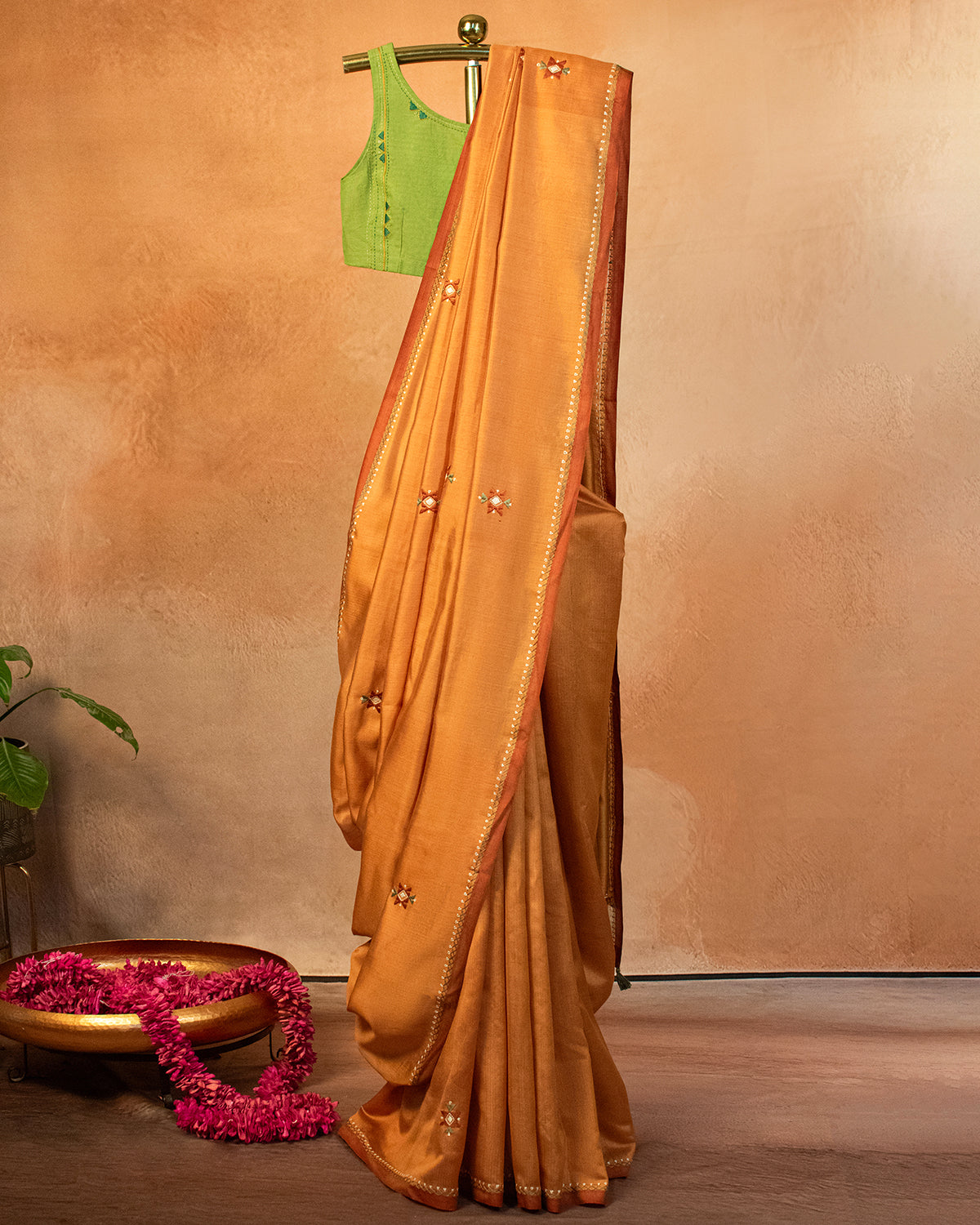
The Narangi Eri Saree with Soof Hand Embroidery suits this softer moment. Eri silk's gentle texture, breathable feel, and easy drape allow the wearer to remain comfortable while still feeling dressed for the occasion. Its Soof embroidery adds a connection to Rajasthan's craft tradition, creating a saree that feels rooted without being overly formal.
And perhaps this is where the story of artisan-made clothing becomes most meaningful. One woman may wear the garment to celebrate with her family. Another woman may have helped create it as part of building a better future for hers. The income from craft can contribute to children's education, household needs, and greater economic independence.
Pratha: Keeping Festive Traditions Alive Through Craft
The word Pratha means custom, tradition and practice—the rituals we return to, the memories we create with loved ones and the values we pass on through generations. Part of Rangsutra’s Pratha collection, the kurta reflects how traditions continue through everyday rituals and celebrations, just as skilled artisans carry forward embroidery techniques through their work. It is a reminder that tradition remains alive when it is practised, shared and reinterpreted across generations.
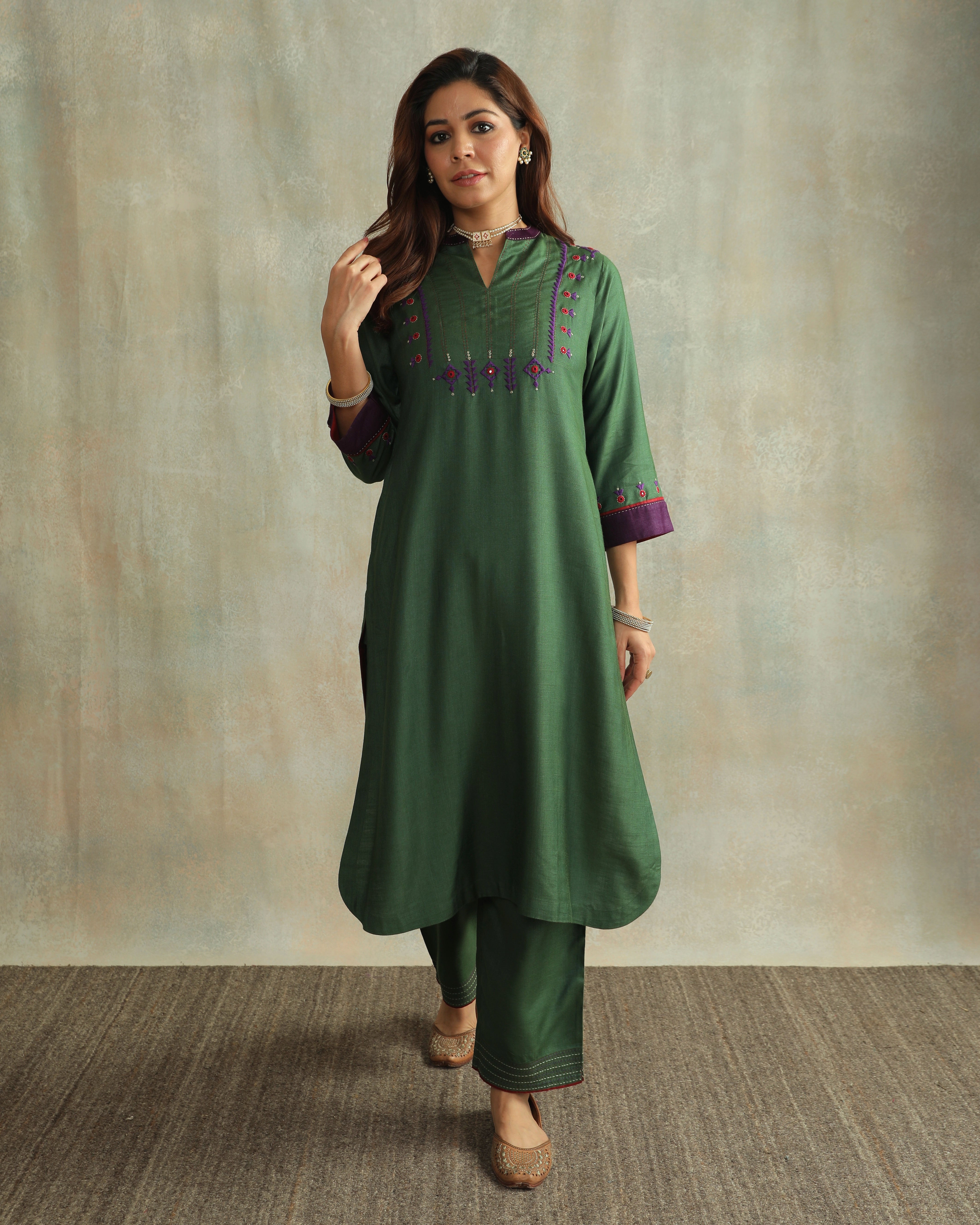
The Pratha Green A-Line Cotton-Silk Kurta with Soof Hand Embroidery brings understated elegance to Bhai Dooj celebrations. Its forest green hue, intricate Soof embroidery across the front yoke and contrasting purple border trims create a distinctive festive look. The flowing A-line silhouette offers graceful movement, making it a beautiful choice for family gatherings and Bhai Dooj rituals.
The Thread That Connects Them
Choti Diwali prepares us for the light. Diwali brings the celebration to life. Bhai Dooj brings us back to the people at its heart.
But behind the clothes worn across these celebrations is another story—one that begins much before a garment reaches a wardrobe.
At Rangsutra, the journey connects artisan communities, traditional skills and organised production, bringing different parts of the making process together while creating livelihoods around craft.
From the Tussar silk cluster in Bihar, where traditional silk-spinning and weaving communities continue their craft despite growing competition from mill-made and synthetic fabrics, to clusters working across weaving, embroidery, and stitching, each stage brings a different skill into the making of Indian clothing.
This is what makes the garment more than its finished form. The fabric carries the work of the weaver. The embroidery carries the skill of the artisan. The stitching brings these elements together. And behind each stage are people whose livelihoods are connected to the continuation of these crafts.
For Rangsutra, keeping Indian craft alive is therefore not only about preserving a technique. It is about creating a working ecosystem where craft, community and livelihood can move forward together.
This makes the festive garment part of a much larger story: a tradition celebrated by the wearer, carried forward by the artisan, and brought together through the work of an entire craft community.
FAQs
1. How can I choose festive clothing that reflects Indian traditions?
Look for garments that feature traditional textiles and embroidery techniques. Rangsutra brings crafts such as Soof embroidery into contemporary sarees and kurtas, allowing you to celebrate Indian traditions through the clothes you wear.
2. What makes Rangsutra’s Pratha collection special for festive occasions?
Named after Pratha, meaning custom, tradition and practice, the collection reflects the customs we carry forward through celebrations and everyday life. Its craft details connect festive dressing with the skills of artisans who continue traditional embroidery techniques.
3. How does shopping from Rangsutra connect me with Indian artisans?
Rangsutra connects traditional craft skills with contemporary clothing and artisan livelihoods. Its artisan-owned model includes 2,330 artisan shareholders who collectively own 22% of the company, while women make up 80% of its artisan workforce. Choosing Rangsutra allows you to discover Indian craftsmanship while learning about the artisan communities behind it and supporting fairly.
4. What should I wear for Bhai Dooj if I prefer a kurta over a saree?
The Pratha Badami Round-Neck Cotton-Silk Kurta with Soof Hand Embroidery offers an elegant alternative to a saree. Its warm badami shade and contrasting maroon embroidery make it suitable for family rituals and gatherings, while its panel-flared silhouette creates a graceful festive look.


