

Before a saree becomes something you wear, it is something someone spends time making.
A thread has to be woven. A surface has to be embroidered. A pattern has to be placed. A fabric has to be handled, checked, and finished by people who have learned these skills through years of practice. In a world where machines can reproduce designs quickly and uniformly, choosing handloom sarees means choosing to value the human work that cannot be separated from the finished piece.
That is why a saree is more than an outfit at Rangsutra. It is a point of view—about what we choose to wear, what we choose to value, and whether traditional craftsmanship still has a place in everyday life.
What You See Is Only the Beginning
When we look at a saree, we usually notice the colour first. Then perhaps the embroidery, the drape, or the texture.
But look a little closer and there is another story.
The Rani Tussar Saree with Soof Hand Embroidery brings together authentic Tussar silk and engineered Soof embroidery rooted in Rajasthan's desert embroidery heritage. The fabric itself carries visible slubs and a naturally earthy lustre, giving it a slightly textured character rather than the completely smooth surface of many machine-finished fabrics.
Then there is the Soof embroidery.
Its presence is a reminder that the saree has passed through another pair of hands before reaching yours. For those exploring soof embroidered sarees, this is what makes the technique more than a decorative element. It becomes part of the story of the garment and the craft behind it.
The Beauty of Work You Can Feel
The Midnight Blue Muga Saree with Soof Hand Embroidery tells the story differently.
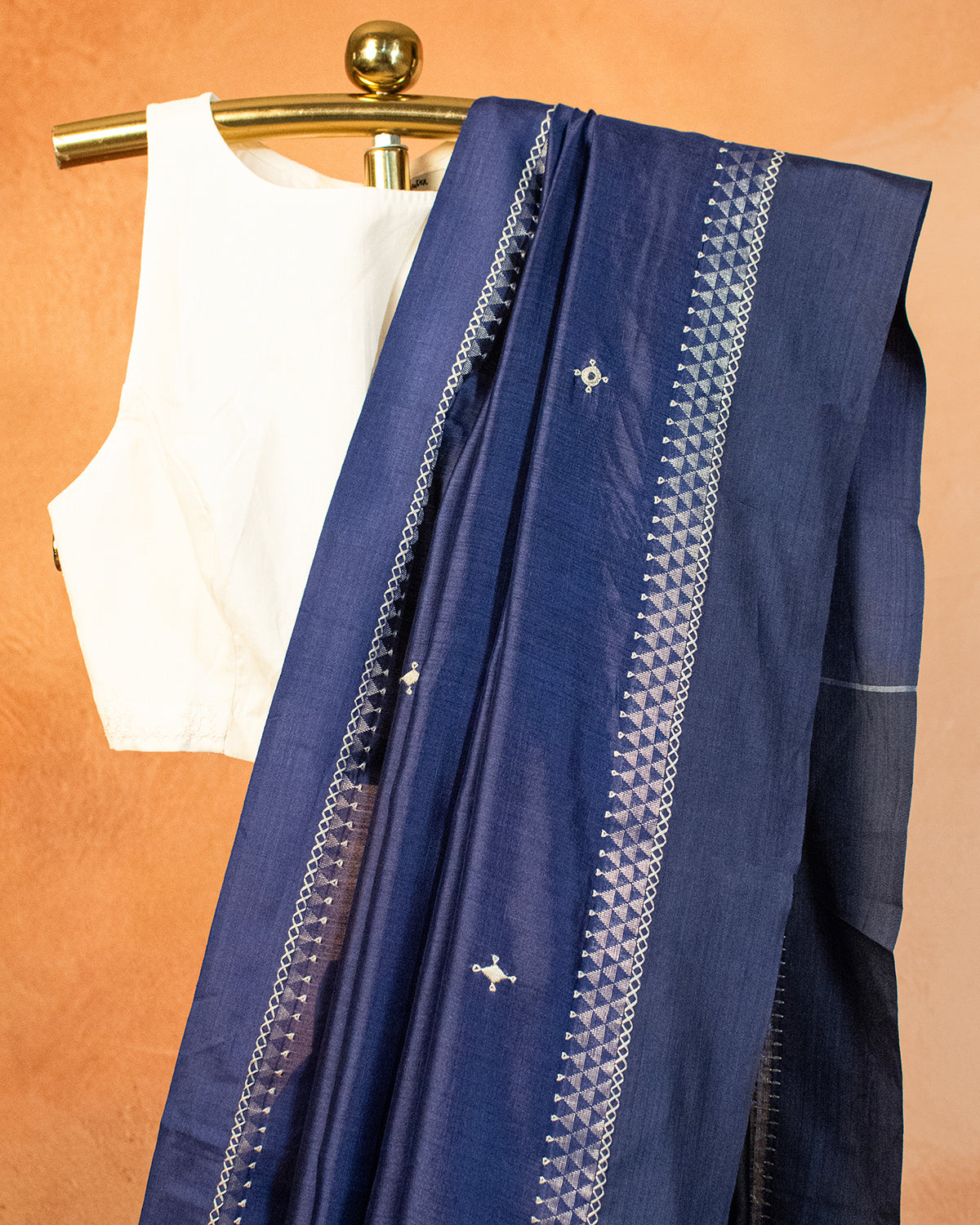
Its handwoven Eri silk has a soft, dense texture and a natural matte finish. It is breathable, comfortable for longer wear, and has a smooth, slightly bouncy drape that falls close to the body.
The Soof hand embroidery adds another layer of craftsmanship to the saree.
What makes this especially interesting is the contrast between the material and the technique. The fabric has a quiet presence, while the embroidery gives you something to discover when you look closer.
This is why muga saree craftsmanship deserves to be experienced rather than simply described. The character is in the fabric itself—the feel, the fall, and the details created by hand.
When Small Variations Become Part of the Story
Machine-made products are often valued for uniformity. Handmade textiles offer something different.
The Sindhuri Tussar Saree with Soof Hand Embroidery is woven in authentic Tussar silk, where visible slubs and its natural texture remain part of the fabric. Its earthy lustre gives the saree a grounded appearance, while Soof embroidery brings Rajasthan's craft tradition into the design.
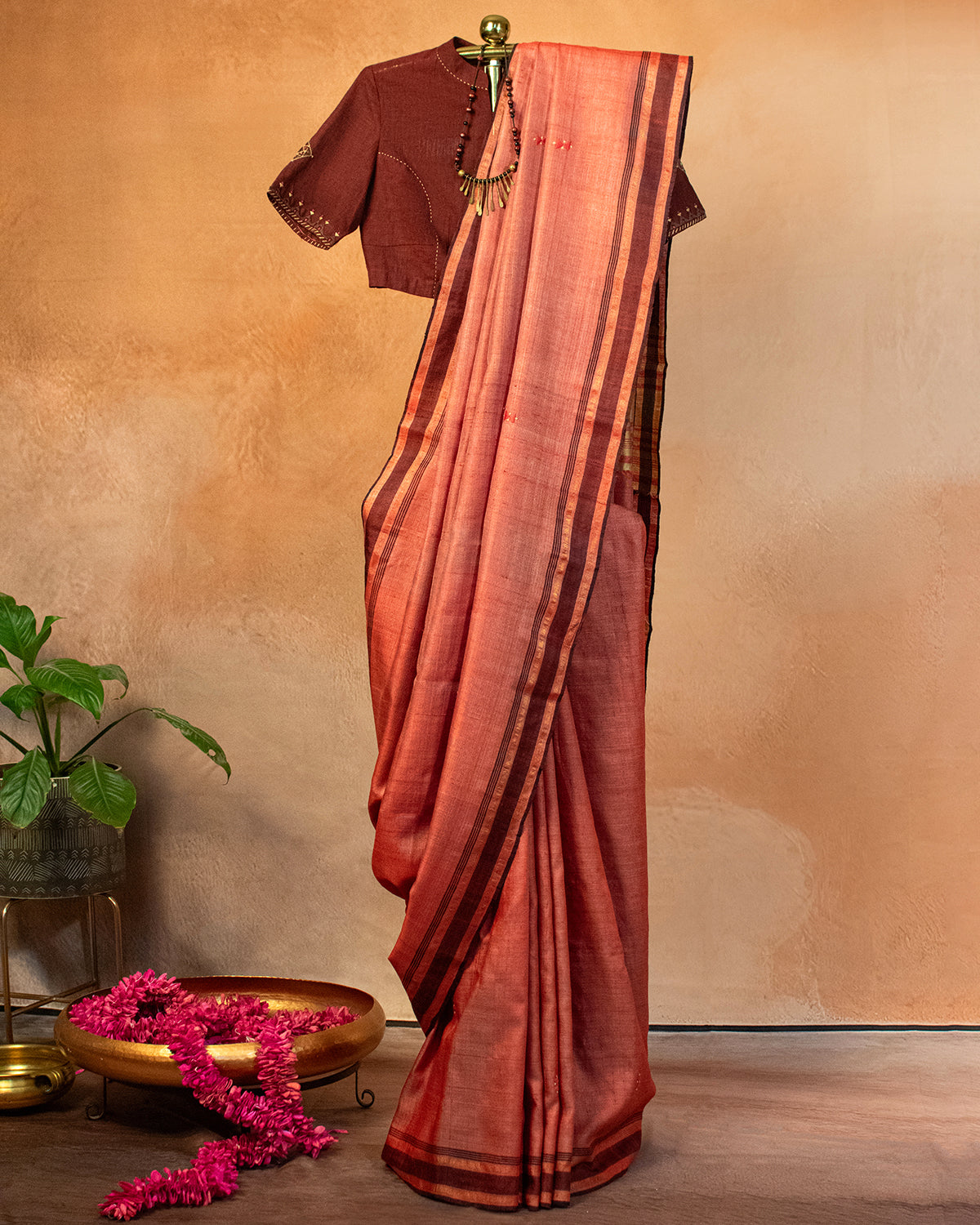
If you are searching for tussar sarees online, these details are worth noticing.
The slightly uneven texture is not something to correct. It is part of what tells you that the textile has a material character of its own. The embroidery is not perfectly replicated from one piece to another. These details make the saree feel individual rather than mass-produced.
That is the difference between simply wearing a textile and understanding something about how it came to be.
When the Weave Speaks for Itself
Not every handwoven saree needs elaborate embroidery to make its presence felt.
The Atapaure Multishaft Saree comes from Maheshwar and is handwoven in mercerised cotton. Its lemon yellow, sky blue, and white palette gives the saree a contemporary character, while its multishaft construction brings the focus back to the weave.
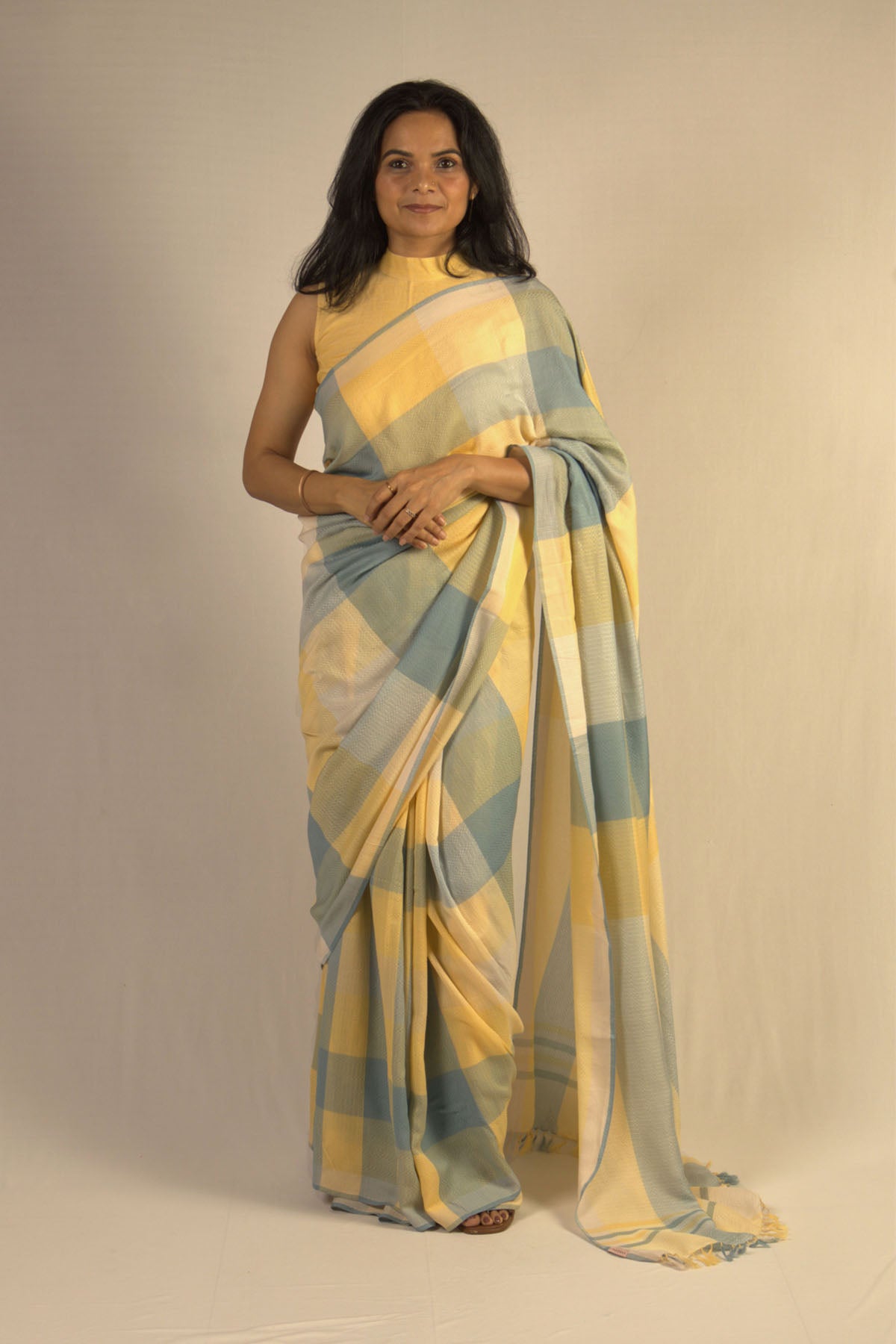
This is where handwoven sarees ask us to look at clothing differently.
The value is not only in how quickly something can be produced. It is also in the skill required to produce it.
When Choosing a Saree Becomes a Choice
Traditional craftsmanship survives when people continue to choose and wear it. Behind every handcrafted saree are skills, techniques, and artisans who keep them alive.
So whether you're exploring handloom sarees online, cotton sarees online, or tussar sarees online, look beyond the finished garment. Look at the craft and the hands behind it.
Because choosing a handcrafted saree is also choosing the kind of craft you want to see continue.
Frequently Asked Questions
1. What makes handwoven sarees different from machine-made sarees?
Handwoven sarees retain characteristics of the weaving process, including natural variations in texture and weave. These details give each piece an individual character.
2. Why are Soof embroidered sarees significant?
Soof embroidery connects contemporary sarees with Rajasthan's desert embroidery tradition. On Rangsutra's sarees, the technique works alongside handwoven textiles such as Tussar and Eri silk.
3. What should I look for when buying tussar sarees online?
Look at the natural texture of the Tussar, visible slubs, the fabric's lustre, and the embroidery technique. These details help you understand the character of the textile rather than judging it only by appearance.
4. Why can handmade sarees have slight irregularities?
Handcrafted textiles can contain small variations in weave or embroidery because they are created through human processes rather than completely uniform machine production. These variations can be part of the piece's individual character.
5. How does wearing handcrafted sarees help keep craft relevant?
When handcrafted textiles continue to be worn in contemporary wardrobes, traditional techniques remain connected to everyday life rather than being limited to heritage displays or occasional celebrations.


