

Before your guests see the festive table, the lights, or the decorations inside your home, they see the doorway. In many Indian homes, that entrance is where the celebration begins.
A toran has traditionally been a simple way of marking that welcome. Today, it can also be a way to bring heritage craft into your home without changing everything around it. Colours, patterns, embroidery, and textiles can add a festive touch while making the entrance feel distinctly personal.
This connection between celebration and craft is at the heart of Rangsutra's approach. By working closely with artisan communities, the brand brings traditional skills into products designed for contemporary homes—creating pieces that feel both rooted and modern.
More Than Just Festive decoration
Festive decorating doesn't always have to mean transforming an entire home. Sometimes, one thoughtfully chosen detail can set the mood.
A toran does exactly that. Placed at the entrance, it introduces colour and texture while creating a sense of occasion. When it is handcrafted, the decoration also carries the character of the hands that made it.
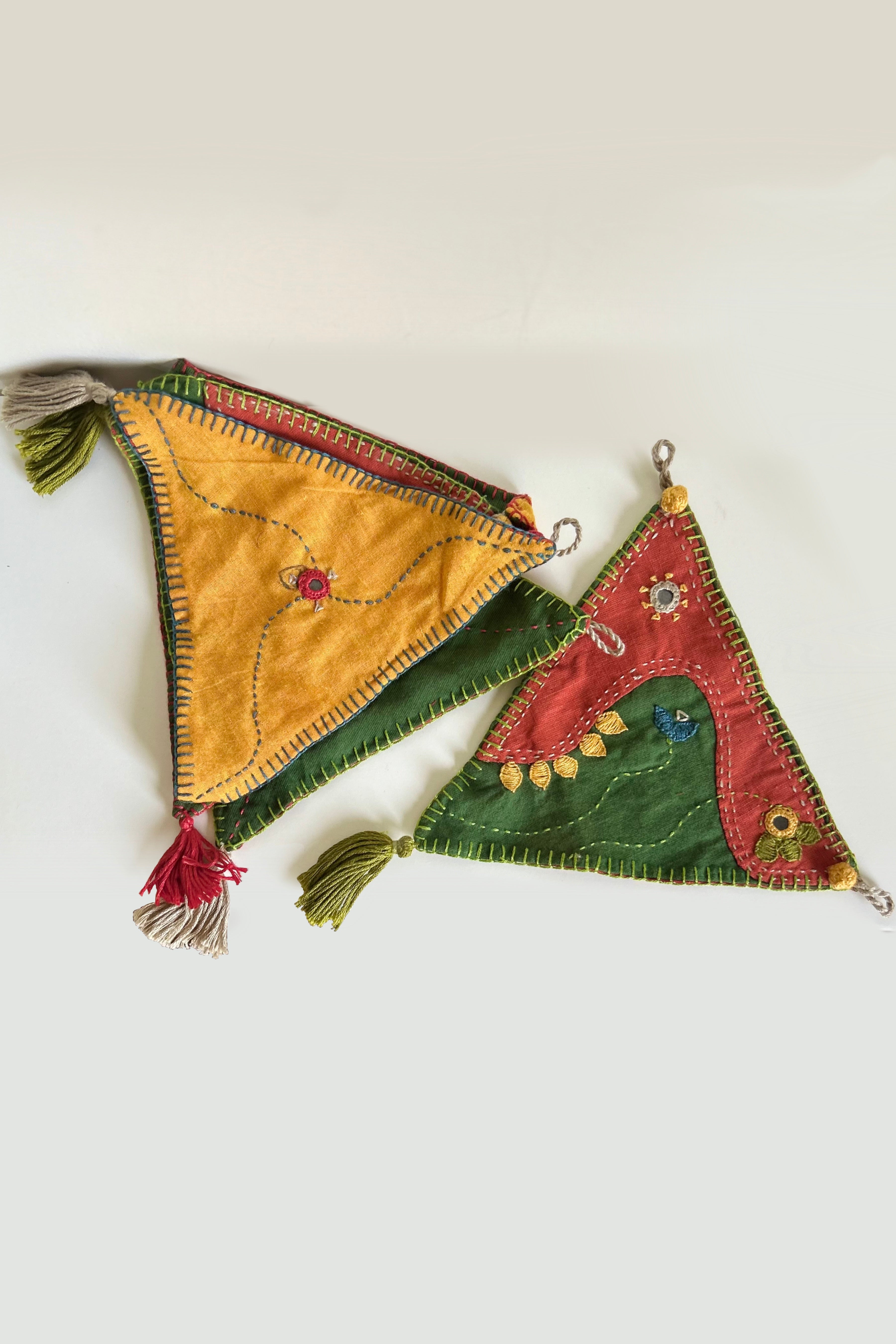
The Patchwork Toran – Assorted is one such example. Made from upcycled cotton fabric scraps and brought together through hand embroidery and appliqué, its mix of colours adds a cheerful touch to the entrance. Each triangle has its own combination of fabric and stitch details, giving the piece a distinctly handmade character.
Where Heritage Craft Meets the Home
India's textile traditions have always been closely connected to everyday life. From woven fabrics to regional embroidery, the textiles of India reflect the skills, materials, techniques, and visual traditions developed across different communities.
A handcrafted toran brings a small part of this textile culture into the home. A colourful patchwork design can sit comfortably alongside modern interiors while still carrying elements of Indian craft.
The Patchwork Toran shows how craft and conscious choices can come together. Using surplus fabric scraps gives existing material another purpose, while the hand embroidery and applique keep the focus on the skill involved in transforming it.
That balance is what makes traditional craft relevant today. It doesn't need to remain unchanged to remain meaningful.
The Hands Behind the Craft
It is easy to notice the colours and patterns of a toran without thinking about the process behind them. But every embroidered detail, appliqued shape, or carefully finished textile represents time and skill.
Preserving craft is therefore not simply about keeping old techniques alive. It is also about creating opportunities for artisans to continue practising those skills as a viable profession.
Rangsutra works closely with artisan communities to help make handlooms and handicrafts a viable and thriving profession. This creates a connection between the people making the craft and the people bringing it into their homes.
When there is continued demand for handcrafted work, traditional skills have a reason to continue being practised, developed, and passed forward.
Rooted in Tradition, Made for Today
Festive decor doesn't necessarily have to look old-fashioned. A handcrafted toran can work just as naturally in a contemporary home as it does in a more traditional setting.
The Patchwork Toran – Assorted, with its bright colours and textile construction, can bring that contrast together. Hang it at the entrance during a festival, or use it on a window or wall when you want to add a little colour elsewhere in the home.
That is where being rooted and modern can work together. The craft remains connected to its origins, while the way we use it can evolve with our homes and lifestyles.
A Welcome That Carries a Story
A toran may be one of the smallest elements of festive decoration, but its position gives it significance. It is the first detail that welcomes someone into your home.
Choosing a handcrafted piece means that the welcome can carry something beyond colour and decoration. It can carry the skill of an artisan, the character of the textiles of India, and the continued relevance of heritage craft.
At Rangsutra, the aim is not simply to preserve these crafts as something from the past. By working closely with artisan communities and creating products that bring their skills into contemporary homes, the craft gets to remain part of everyday life.
So this festive season, perhaps the first thing your guests see can also be a reminder of the hands, skills, and communities that make Indian craft worth celebrating.
FAQ
Q. What is a toran?
A toran is a decorative hanging traditionally placed above the entrance of a home.
What is a toran used for?
A toran is traditionally placed at the entrance of a home as a symbol of welcome and celebration. Today, it is also a simple way to add colour, texture, and a festive touch to a doorway.
Q. Can a handmade toran be used beyond festivals?
Yes. A handmade toran can also be used around windows, on walls, or as part of everyday home decor. Choosing a design that works with your existing space can help it feel less seasonal.
Q. What makes a handcrafted toran different?
The embroidery, appliqué, stitching, and textile work reflect the skill involved in making the piece. Small variations in fabric or detailing can also give handmade pieces their individual character.
Q. How can traditional craft work in a modern home?
Traditional craft doesn't have to mean traditional interiors. A colourful handcrafted textile piece can add texture and personality to a contemporary space while maintaining its connection to Indian craftsmanship.


